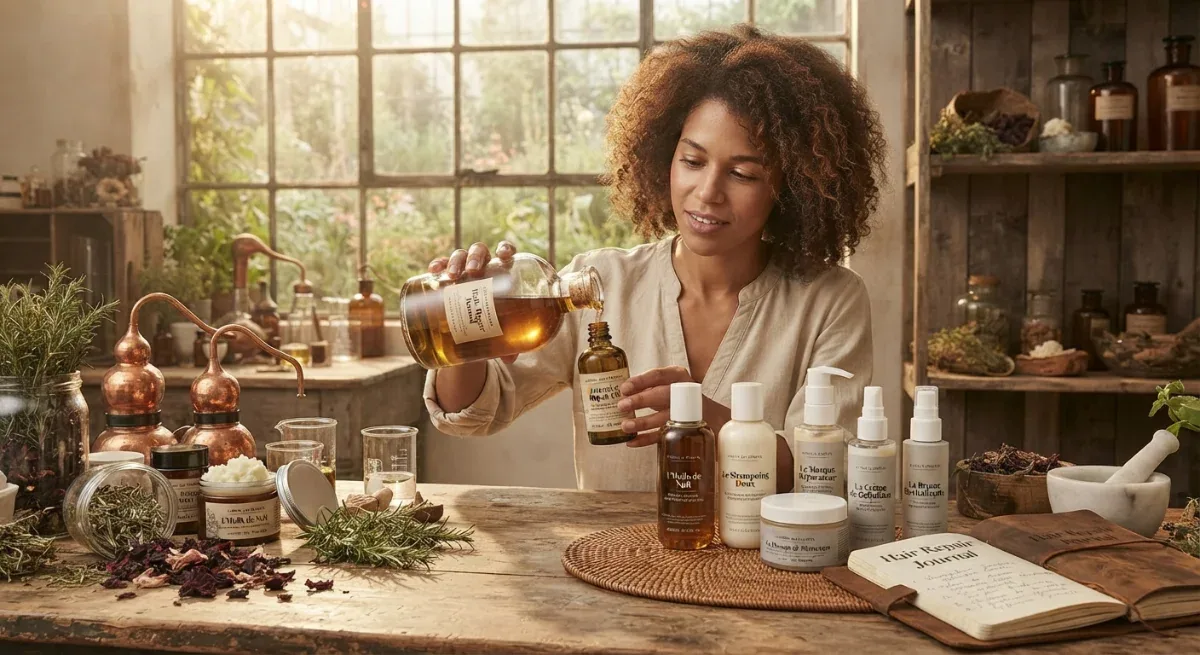
From bond-building treatments to protein masks, everything you need to bring your hair back to life.
What Causes Hair Damage?
Hair damage occurs when the protective outer layer (cuticle) is worn away, exposing the inner cortex. This leads to split ends, breakage, frizz, and a dull, lifeless appearance. Here are the most common culprits:
- Heat styling: Flat irons, curling wands, and blow dryers at high temperatures strip moisture and break down protein bonds
- Chemical processing: Bleaching, coloring, perming, and relaxing all weaken hair structure
- Environmental stress: UV exposure, pollution, and hard water accumulate damage over time
- Mechanical damage: Aggressive brushing, tight hairstyles, and rough towel-drying
How Do Hair Bonds Actually Break?
Your hair is held together by three types of bonds: disulfide bonds (the strongest), hydrogen bonds, and salt bonds. Chemical and heat damage breaks these bonds, leading to weak, brittle hair.
Bond-building treatments like Olaplex work by finding broken disulfide bonds and relinking them, essentially repairing damage from the inside out.
Which Products Repair Damaged Hair Best?
| Product | Best for | Price |
|---|---|---|
| Olaplex No.3 Hair Perfector | Best overall bond repair treatment | $30 |
| K18 Leave-In Molecular Repair Mask | Best for severe damage | $29 |
| Redken Acidic Bonding Concentrate | Best budget-friendly option | $24 |
How Do You Build a Hair Repair Routine?
Step 1: Assess the Damage
Do the “float test”, drop a clean strand in water. If it sinks immediately, your hair is highly porous (damaged). If it floats for a while, you have low porosity (less damage but product buildup issues).
Step 2: Start with a Bond Builder
Use a bond-repair treatment (like Olaplex No.3) once a week for 4-6 weeks. Apply to damp hair, leave on for 10+ minutes, then shampoo and condition as usual.
Step 3: Add Protein Treatments
Damaged hair needs protein to rebuild structure. Use a protein mask or treatment every 2 weeks. But be careful, too much protein causes brittleness.
Step 4: Seal with Moisture
After protein, always follow with a moisturizing conditioner or mask. The protein-moisture balance is critical for healthy, resilient hair.
Ingredients to Look For
- Bis-Aminopropyl Diglycol Dimaleate, Olaplex’s patented bond-builder
- Keratin proteins, Rebuild the hair’s natural structure
- Ceramides, Seal the cuticle and prevent further damage
- Hyaluronic acid, Attracts and holds moisture
- Argan oil, Rich in vitamin E and fatty acids for shine and protection
What to Avoid
- **** Heat tools above 350°F (175°C) without heat protectant
- **** Sulfate shampoos (they strip natural oils and color)
- **** Daily washing (strips protective oils)
- **** Brushing wet hair aggressively (use a wide-tooth comb instead)
- **** Skipping regular trims (split ends travel up the shaft)
When Should You See a Professional?
If your hair is snapping off, has extensive breakage, or won’t respond to at-home treatments after 8 weeks, it’s time to consult a professional trichologist or experienced colorist. Sometimes the only fix for severe damage is a gradual cut and grow-out strategy.
Keep reading: Top shampoos for damaged hair · The Science of Hair Damage · Take the Hair Quiz.
Compare Damaged Hair Products
Bond builders and protein cleansers for breakage, split ends and over-processed lengths.
Questions
Frequently asked
01 How long does it take to repair damaged hair?
Expect four to six weeks of weekly bond-building treatment before the difference is measurable. Hair grows roughly a centimetre a month, so severely damaged lengths are replaced rather than healed, the treatment stops further breakage while new growth comes through.
02 Can split ends be repaired without cutting?
No. Once the fibre splits there is no way to rejoin it; sealing serums bind it temporarily and it reopens within a few washes. Trimming every eight to twelve weeks stops the split travelling further up the shaft.
03 Is protein or moisture better for damaged hair?
Both, alternated. Protein rebuilds structure and stiffens the fibre, moisture keeps it flexible. Protein alone makes hair brittle within a few weeks, which is the most common mistake in a repair routine.
Sources & further reading
- Robbins, C., Chemical and Physical Behavior of Human Hair, 5th ed., Springer. Reference text on disulfide bonding and cuticle damage mechanisms.
- Olaplex patent US 9,668,954 B2, published chemistry of bis-aminopropyl diglycol dimaleate bond repair.
- Brand INCI lists, Olaplex, K18 and Redken ingredient declarations, retrieved September 2026.